
An AI face report can offer a different way to explore visible details in a portrait. Start by asking which photo and conditions produced the result. That context makes the interpretation easier to assess.
A photo is not the whole person
A portrait records one moment. Expression, lighting, camera position, and image quality influence what it shows. A description generated from a single frame does not represent every feature or your appearance in every setting.
Treat interpretations as interpretations
AI systems can produce incorrect, incomplete, or inconsistent descriptions. A comment about visual balance or expression does not establish that a scientific measurement took place. Use it as a starting point for reflection or inspiration instead of a universal beauty standard.
Do not use a report as a medical assessment
FaceReport AI reports are not intended for medical assessment or diagnosis. Do not draw health conclusions from an appearance-based report.
Compare the conditions before comparing results
Two photos taken with different light, angles, or expressions may generate different reports. The difference alone does not establish a real change in you. Keep the photo conditions in view when comparing descriptions.
Choose the idea that helps you
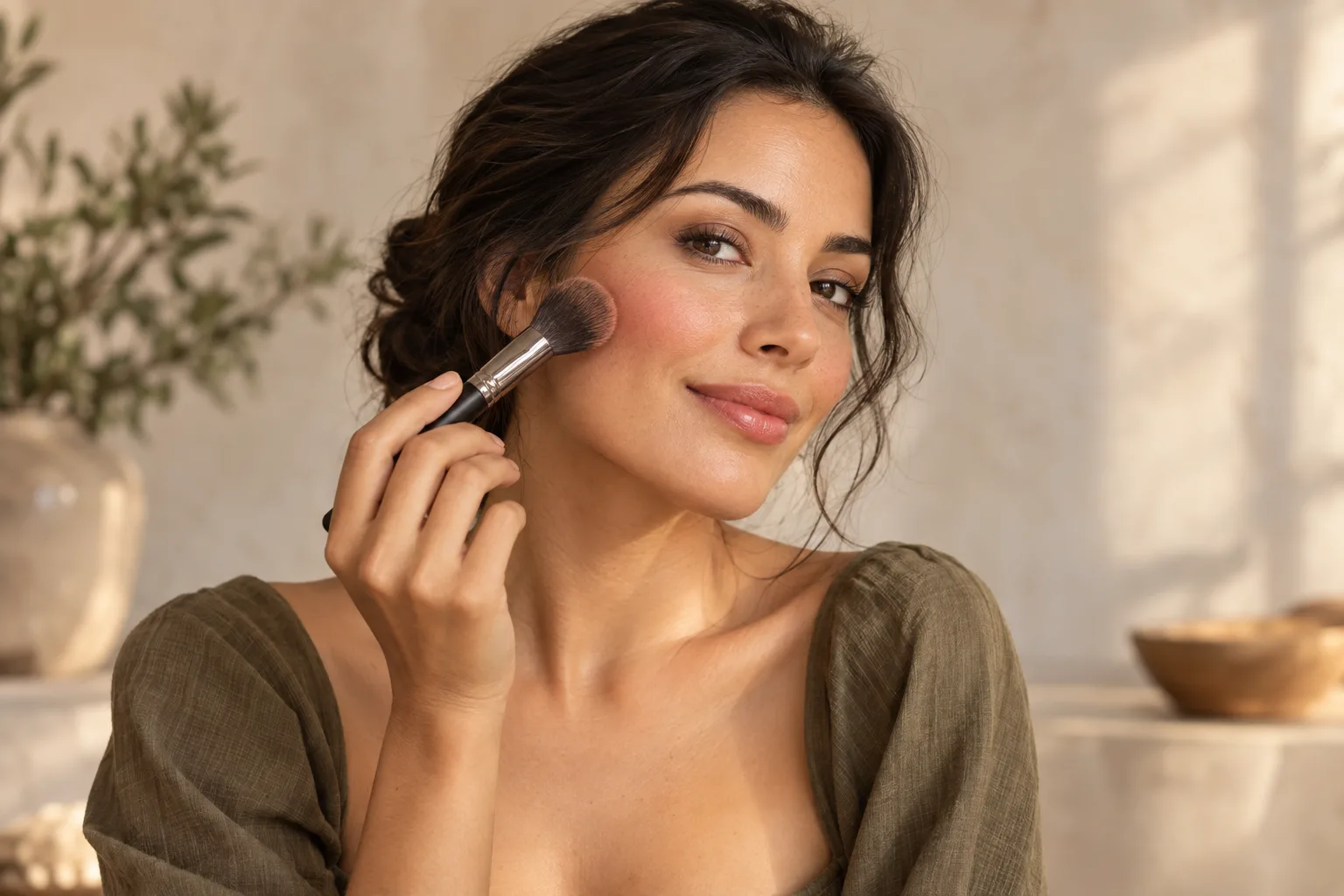
For makeup, you can keep a color or technique you like and skip everything else. Your taste and comfort should lead the decision. You do not need to follow every suggestion in a report.
How accurate is AI face analysis?
A single accuracy percentage is not meaningful without specifying the feature, method, and reference used to evaluate it. Do not treat FaceReport AI's visual interpretations as validated biometric measurements or scientific beauty tests. A displayed number does not become a universal standard just because it is numerical. Confident wording can still be wrong.
What if the report feels unexpected?
Check the input first: is the photo blurry, heavily filtered, shadowed, or partly covered by hair? A clearer frame may be a more understandable starting point. A changed report after changing the photo is not proof that you changed.
If a suggestion does not fit your preferences, leave it aside. Rather than repeating reports to evaluate yourself, choose one useful makeup idea or visual detail and stop there.
Work through one comment before reading the score
Suppose a report describes “balanced lighting” but your original photo has a bright window on one side. Keep the disagreement visible: write “window to my left; one cheek brighter” in your own notes. You do not need to accept the description because it appears in a polished report.
Try sorting what you read into three groups. First are things you can check in the image, such as the frame or visible shadow. Second are style ideas you might enjoy, such as a softer color direction. Third are conclusions the photo cannot establish, such as health or personal worth. Keep the first two in context and leave the third aside.
Can you compare two face report scores?
A numerical difference alone is not a reliable before-and-after result. The input, image processing, and generated interpretation may all differ. If you want to remember a report, record why it was useful: “portrait near the window” is more informative than “my better score.”
For an informal comparison, note the photo conditions before requesting anything new. A different output for the same image can also reflect AI variability. There is no need to keep generating reports until you receive a particular number. Use the photo checklist when you want a clearer starting image.
Three questions to ask while reading
- Which photo and shooting conditions does this explanation rely on?
- Is this an observation, an interpretation, or a claim that would need separate evidence?
- Which idea fits my preferences and the time I have?
If the terms are new, read what AI face analysis means. For a clearer input, use the photo checklist. To adapt an idea in practice, try the five-step everyday makeup routine.
INSIDE FACEREPORT AI
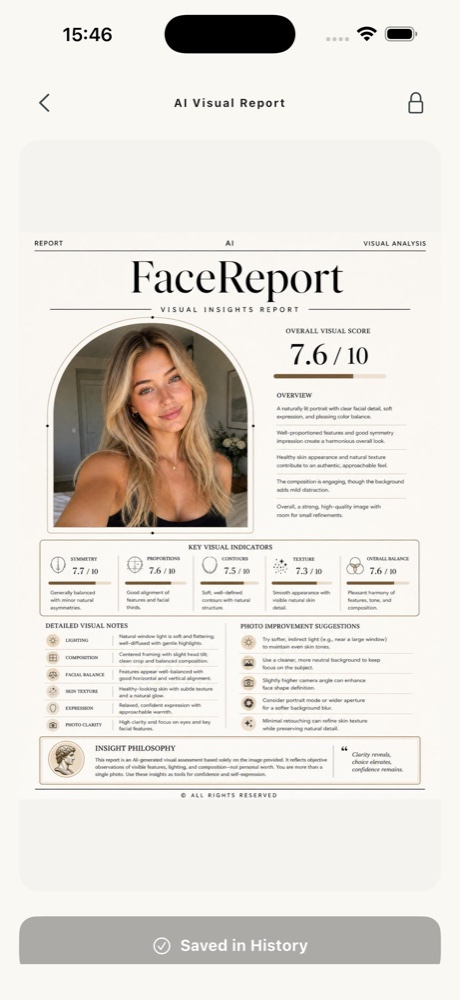
Read the explanation before the number
Look at the lighting and composition notes in this sample. They interpret a photo; they are not scientific measurements or a measure of personal worth.
- Find the detail discussed in your original photo.
- Leave aside an interpretation you disagree with.
- If useful, save the report to favorites with your own note.
Photo selection, consent, and reports happen in the app. AI ideas may be incorrect. Access and current prices are shown in the app.
For information and inspiration. How we prepare our guides ↗ · Türkçe sürüm ↗